


...working to protect, restore and preserve Ann
Lake and the Ann Lake ecosystem.
ANN LAKE WATER QUALITY IS NOT
ACCEPTABLE
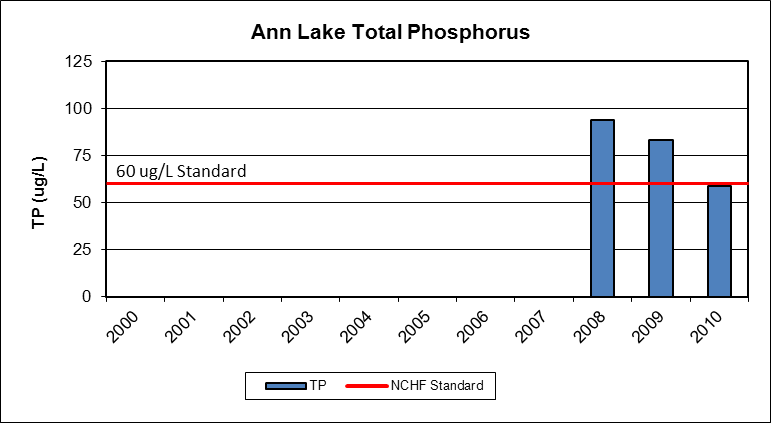
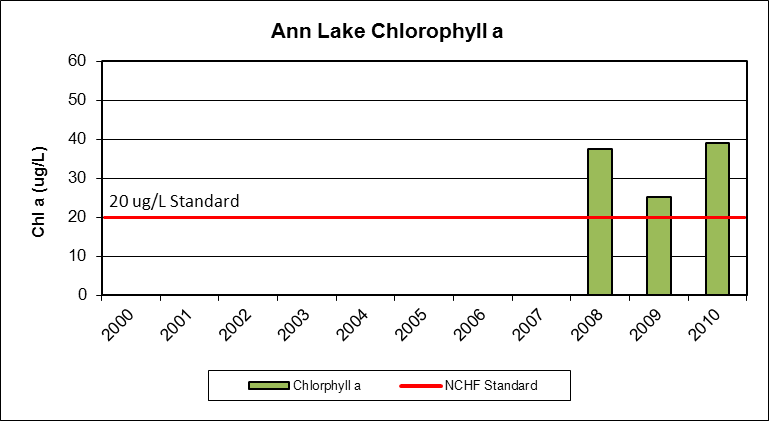
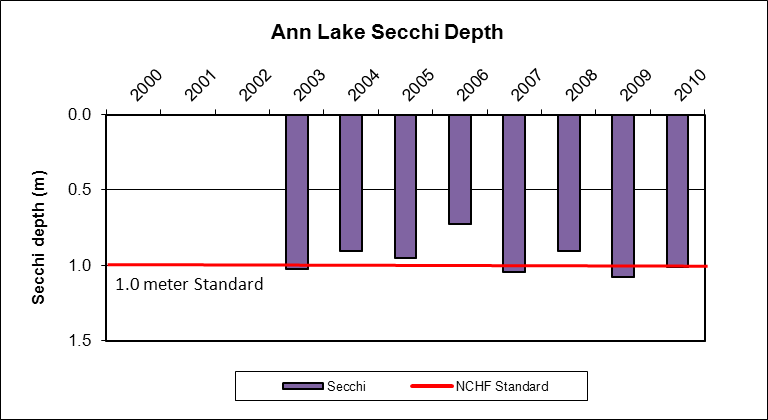
THE PROBLEM: Excessive levels of phosphorus and chlorophyll-a which cause algae blooms and reduce clarity
THE CAUSE: 1) Erosion sediment already in the lake 2) phosporus released from dead curly leaf pondweed, and 3) sediment entering the lake from streams and storm run off
THE
FIX: 1) Treat lake water to lower phosphorus levels 2)
Control/reduce growth of curly leaf pondweed 3) Reduce new erosion
sediment entering the lake
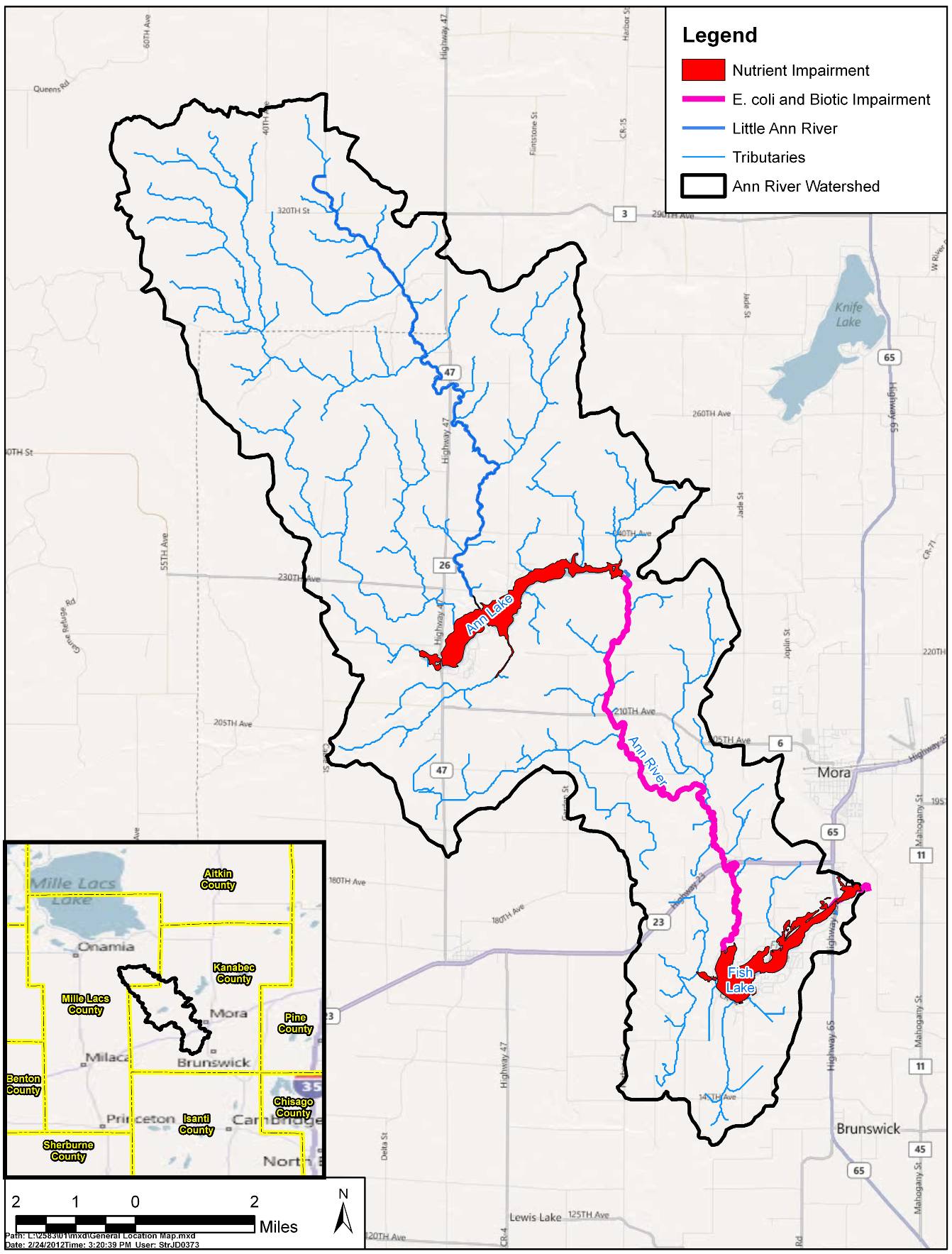
The Kanabec County Soil and Water Conservation District recently completed a study (TMDL) of the water's bacteria content, nutient content, and ability to support fish and macroinvertebrate life. The TMDL report is part of a nationwide effort under the federal Clean Water Act to identify and clean up pollution in streams, rivers and lakes. Every two years, states are required to submit a list of impaired waters to the U.S. Environmental Protection Agency (EPA). Ann Lake has been on that list since 2004. A TMDL report is a scientific study that calculates the maximum amount of a pollutant a water body can receive (known as the “loading capacity”) without exceeding water quality standards. The goal of the TMDL study was to quantify the pollutant reductions needed to meet State water quality standards for nutrients in Ann and Fish Lakes and E. coli and State Index of Biotic Integrity standards in the Ann River.
Water quality in Minnesota lakes is often evaluated using three associated parameters: total phosphorus, chlorophyll-a, and Secchi depth. Total phosphorus is typically the limiting nutrient in Minnesota’s lakes meaning that algal growth will increase with increases in phosphorus. Chlorophyll-a is the primary pigment in aquatic algae and has been shown to have a direct correlation with algal biomass. Since chlorophyll-a is a simple measurement, it is often used to evaluate algal abundance. Secchi depth is a physical measurement of water clarity, measured by lowering a black and white disk until it can no longer be seen from the surface. Higher Secchi depths indicate less light refracting particulates in the water column and better water quality. Conversely, high total phosphorus and chlorophyll-a concentrations point to poorer water quality and thus lower water clarity.
The high phosphorus levels in the water
are due to erosion sediment in the lake. The sediment
releases phosphorus into the water. High phosphorus levels promote
the growth of algae, causing summer nuisance algae blooms and
reducing water clarity. Phosphorus loading of the lake
must be reduced by 39% to meet clean water standards. It is
thought that this can primarily be accomplished by reducing the
phosphorus already in the lake and reducing incoming phosphorus
load from incoming streams and storm runoff by 4%.
The plan to accomplish this goal is currently being developed.